
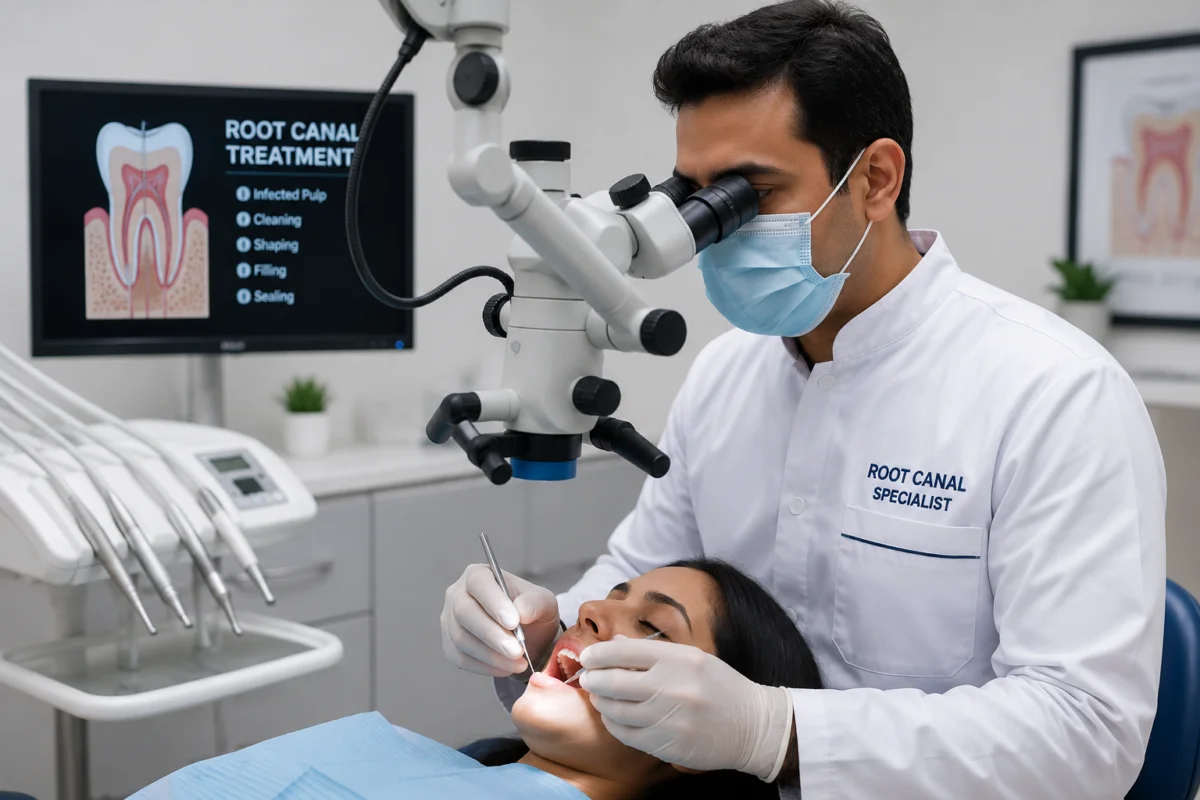
Few phrases make people tense up like "root canal." But here is the truth: with modern techniques and anesthesia, a root canal feels a lot like getting a filling. And it saves a tooth that would otherwise need to be pulled. If you have been putting one off out of fear, this is for you.
Why teeth need root canals
Inside every tooth is soft tissue called pulp, with nerves and blood vessels. When deep decay, a crack, or an injury lets bacteria reach the pulp, it gets infected. That is what causes the intense, throbbing toothache that painkillers barely touch. Without treatment, the infection spreads, and the tooth usually has to come out.
What actually happens
First, we make sure you are completely numb. You should feel pressure, not pain, and we check with you throughout. Then we remove the infected pulp, clean and disinfect the inside of the tooth, and seal it. That is really it. Most root canals take one or two visits, and afterward the tooth usually gets a crown to protect it and restore full chewing strength.
Why saving the tooth matters
Nothing chews quite like your natural tooth. Keeping it preserves your bite, protects the neighboring teeth from shifting, and avoids the cost and complexity of replacing a missing tooth with an implant or bridge. A treated tooth can last decades with normal care.
If you have lingering sensitivity to hot or cold, pain when biting, or a pimple-like bump on your gum, do not wait. Tooth infections do not improve on their own. Call us at (978) 788-9338 or visit our emergency dentistry page, and we will get you comfortable fast.
After your root canal: what to expect
Once the numbness wears off, mild soreness for a day or two is normal and easily managed with over-the-counter pain relief. Most people go back to work or school the next day. Eat on the other side until we place your final crown, since the temporary filling is not meant for heavy chewing.
Call us if pain gets worse instead of better after a few days, or if you notice swelling. That is uncommon, but we want to hear about it. Otherwise, just keep the follow-up appointment for your crown. That final restoration protects everything we just saved, and then you can forget the whole thing ever happened.
The bottom line: a root canal relieves pain, saves your tooth, and is far more comfortable than its reputation suggests. If you are hurting, do not wait. Relief is one appointment away.